My child's school is fine, too bad yours stinks
By Carol Lloyd, Executive Editor
Other people may have children who are all dressed up and going to hell in a hatchback, but my wonderful progeny, don't worry about them. My children are fine.
We've all been there. Worrying about other people's children while we ignore the fact that our own flesh and blood may not be quite as on track as we presume. Turns out this isn't just bit of armchair psychology, but more the stuff of endowed chairs. In fact, it's a burgeoning field of neuroscience that doesn't only explain why most of us -- about 80% -- underestimate our risk of cancer, divorce, and car accidents, but also may explain some happy delusions we cleave to about our own children.
Rose-colored hard wire
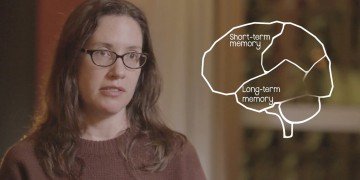
In fact, there's a growing body of research about the "optimism bias" which finds that we underestimate the likelihood of experiencing bad events and overestimate the likelihood of experiencing good events. Cognitive neuroscience Tali Sharot and her fellow researchers have discovered that there's actually a region of the brain -- the left inferior frontal gyrus -- where the optimism bias is headquartered. And researchers can turn it on and off by running a magnetic current through research subjects! Studies have shown that this optimism bias has many benefits -- helping us stay productive, stress-free, and energetic. Only mildly depressed people have no optimism bias, with severely depressed people having a negative bias.
What does all this have to do with kids? This week NPR's Shankar Vedantam interviewed Sharot about some new research which found that this optimism bias extends to parents' predictions for their own children. The study found that while 69% of American adults are obese and more than 80% are worried about the national obesity epidemic, only 20% are worried about their own children's risk of obesity, in an apparent contradiction that NPR summed up thus: "Your child's fat, mine's fine."
Nearly three fourths of the parents in the poll reported that their chidren were "about the right weight," while only 14% are a little or very overweight, in contrast to national data finding that 32% of children are overweight, including 17% who are obese.
It isn't hard to see that when it comes to our children's health (as well as our own), the optimism bias may be more dangerous. Instead of our Pollyanna neurons inspiring us to, say, apply to yet another job in a down economy, our inclination toward positive thinking could also lull us towards opting for another evening of chicken nuggets.
Hope springs educational
Not surprisingly, one of the most prominent polls about parents' perception of public education highlights just this same optimania. According to a Gallup poll, more than three out of four of public school parents regard their child's school as an "A" or "B," but less than one in five of Americans grade the nation's public schools that well. There has been much parsing of this data, but perhaps the simplest response is that it reflects typical brain functioning, a.k.a. human nature. We're optimistic about our personal experience, but hold a slightly negative bias about national trends.
The question is: What will help our children's education most? A bias towards seeing the silver lining or the dark clouds? Being overly optimistic about my daughter's schooling has sometimes made me to look back with regret: "Why didn't I do something?" On the other hand, casting a negative shadow over my child's school because of national stats seems like it would poison the waters of her learning.
All this leaves me floating somewhere between the dark cloud and the silver lining: foggy. What do you all think? Do you remain hopeful about your child's school despite evidence that we're all inclined to overlook signs to the contrary? What do you think's the best approach when it comes to supporting our child's education? Optimistic at all costs or not?
Related articles

Comments